
Repeated IVF failure is emotionally exhausting. However, repeated failure does not mean permanent infertility. It signals the need for deeper investigation.
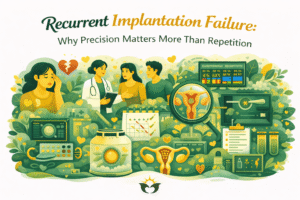
What Is Recurrent Implantation Failure?
Recurrent implantation failure is typically considered after multiple high-quality embryo transfers fail to result in pregnancy.
Implantation depends on:
Embryo quality
Uterine lining receptivity
Hormonal synchronization
Immune balance
Genetic compatibility
Failure may result from disruption in any of these areas.
Possible Causes
Chromosomal abnormalities in embryos
Thin or poorly receptive endometrial lining
Chronic endometritis
Uterine fibroids or polyps
Immune-related factors
Thyroid or metabolic disorders
Advanced Diagnostic Tools
Modern fertility centers use:
Endometrial receptivity assays
Hysteroscopy
Preimplantation genetic testing (PGT)
Doppler blood flow studies
Immune marker evaluations
Precision-based treatment replaces repetitive cycles.
Why Personalization Improves Success
Standard IVF protocols may not work for everyone. Personalized protocols adjust:
Stimulation medications
Embryo transfer timing
Hormonal supplementation
Immune modulation
Lining preparation strategies
The focus shifts from “trying again” to “understanding why.”
Recurrent implantation failure is not about failure. It is about refinement.
When science and personalization combine, outcomes improve.