
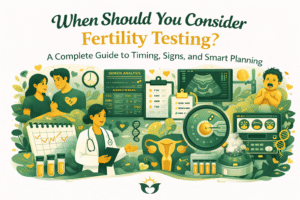
Fertility testing is often misunderstood. Many people assume testing is only necessary after repeated failed attempts at conception. In reality, fertility evaluation is a proactive medical step — not a reaction to failure.
Understanding when to test can significantly reduce emotional stress, unnecessary waiting, and delayed treatment decisions.
The Biological Timeline: Why Timing Matters
Female fertility gradually declines with age. Egg quantity and quality begin declining in the late 20s, with a sharper drop after 35. However, this decline is not identical for everyone. Some individuals may experience reduced ovarian reserve earlier, while others maintain stable fertility markers longer.
Male fertility also changes with age. While sperm production continues throughout life, sperm quality — particularly motility and DNA integrity — can decline due to aging, lifestyle, and environmental factors.
Because fertility changes are silent, waiting for visible symptoms is not always wise.
General Guidelines for Fertility Testing
Medical recommendations typically suggest:
Under 35 years: Seek evaluation after 12 months of trying without success.
35 years and above: Seek evaluation after 6 months of trying.
40 years and above: Seek early consultation before attempting conception.
However, these timelines apply to couples actively trying. Preventive testing may be useful even before this stage.
Situations Where Early Testing Is Recommended
You should consider fertility testing sooner if you experience:
Irregular or absent menstrual cycles
Painful periods suggestive of endometriosis
Known PCOS or thyroid disorders
History of pelvic infections
Previous ectopic pregnancy
Recurrent miscarriages
Family history of early menopause
Known male reproductive concerns
Even individuals not planning pregnancy immediately may benefit from baseline testing in their late 20s or early 30s.
What Does Fertility Testing Involve?
For women, evaluation may include:
AMH (Anti-Müllerian Hormone) testing for ovarian reserve
FSH and LH levels
Thyroid profile
Prolactin levels
Pelvic ultrasound
Tubal assessment when indicated
For men:
Semen analysis
Hormonal evaluation if abnormalities are found
Advanced sperm DNA testing in specific cases
Testing does not automatically lead to treatment. In many cases, small hormonal adjustments, weight management, thyroid correction, or lifestyle optimization significantly improve outcomes.
Why Waiting Can Reduce Options
The biggest risk of delaying testing is narrowing available options. For example:
If ovarian reserve is low, early intervention or fertility preservation may be considered.
If sperm parameters are borderline, lifestyle optimization may improve quality over months.
If structural abnormalities exist, minor procedures may correct them.
Testing is not about labeling someone infertile. It is about understanding reproductive health.
Clarity early in the journey often prevents crisis later.